
Chita
Transbaikalia • Eastern Siberia
Deep in eastern Siberia, Chita became home to Jewish settlers in the 1860s. By 1900, the Trans-Siberian Railway had turned this remote outpost into a bustling city — and one of Russia's most important Jewish communities east of the Urals.
The Synagogue on Ingodinskaia Street
Built in 1907, this was no modest prayer house. It was the largest synagogue in Asia — a bold declaration that Jewish life had taken root even at the edge of the Russian Empire.
For thirty years, it was the heart of the community. Then came the Soviets. By 1929, the government seized the building. The Jewish community was outlawed. The synagogue was converted to other uses, its purpose erased.
Seventy-five years later, in 2004, the building was finally returned. The Jewish community of Chita — much smaller now, but still there — has it back.
Photographed by William Brumfield
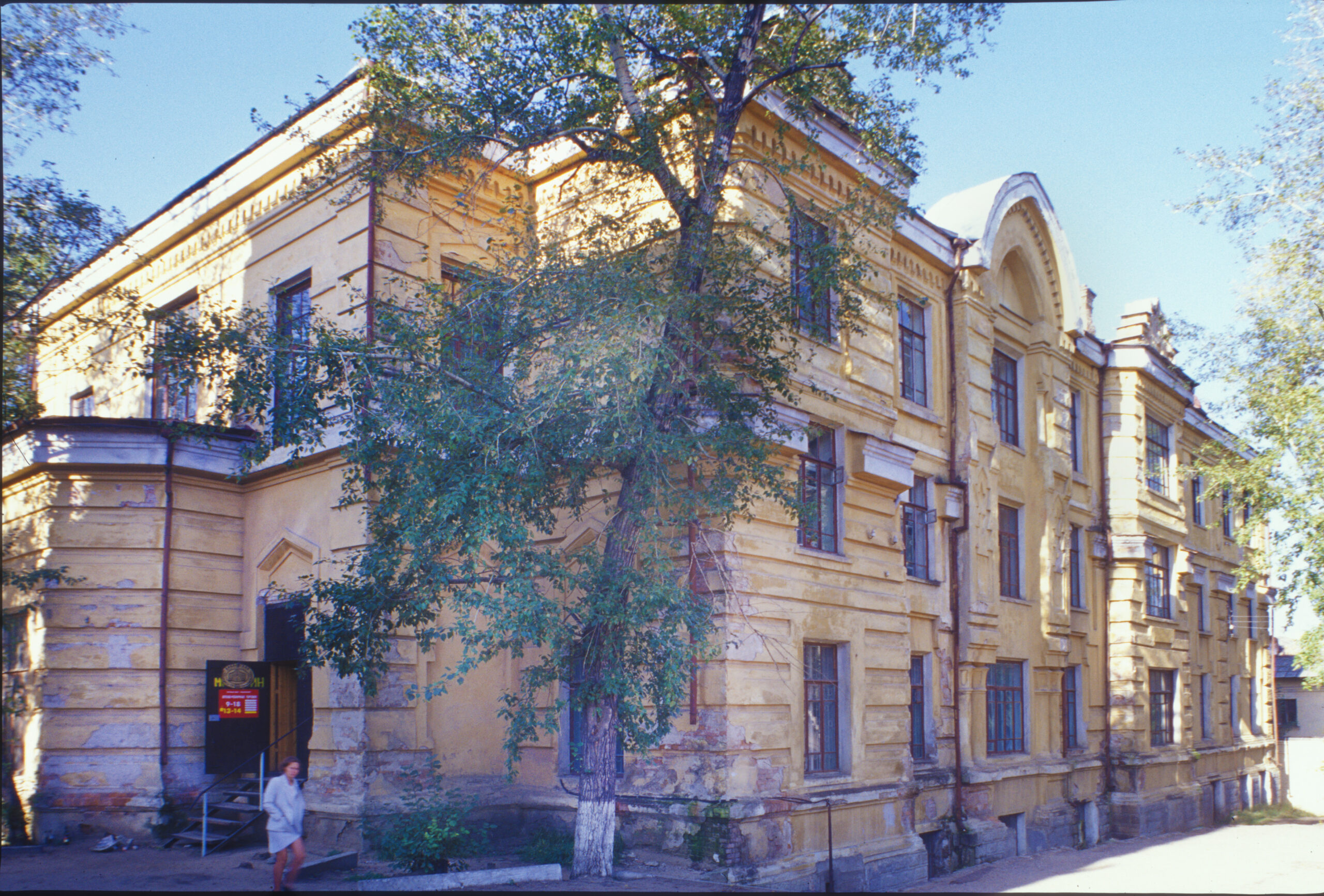
Synagogue, Ingodinskaia Street 19, North Facade
This photograph from Professor William Brumfield's archive captures the synagogue's north facade. Part of his decades-long documentation of Jewish architectural heritage across Russia, this image preserves a view of the structure that has since been altered by nearly a century of history.
Sources
Center for Jewish Art, Hebrew University of Jerusalem
Federation of Jewish Communities of Russia
Kuras, L.V. & Kalmina, L.V. "Jewish Communities of Western Transbaikalia," Claretianum, 2001