
Omsk
Western Siberia · Jewish Heritage on the Steppe
Omsk sits at the confluence of the Irtysh and Om rivers in western Siberia, founded in 1716 as a Russian fortress on the steppe and later, in 1822, designated administrative capital of Western Siberia. Its Jewish community formed at the meeting point of two imperial systems: penal exile and military conscription.
The first Jewish residents arrived as exiles — sentenced to Siberia under Tsarist criminal codes that frequently targeted Jews of the western provinces. They were soon joined by a far larger group: the Cantonists. Between 1828 and 1856, Jewish boys conscripted under Tsar Nicholas I’s 1827 decree were channeled into the Cantonist regiment stationed at Omsk, where they spent their adolescence in barracks and their adulthood in 25-year terms of military service. Many resisted heavy pressure to convert to Christianity. On discharge they were granted residency rights in regions of the empire normally closed to Jews, and a substantial number remained in the city where they had served.
By 1897 there were 1,138 Jews in Omsk; on the eve of World War II, more than 2,000; by 1959, after wartime evacuations from the western Soviet Union, the figure had risen to roughly 9,000. Today the community numbers in the low thousands, anchored by an active Chabad center and the synagogue documented in this archive.
The Omsk Synagogue
FIRST CONGREGATION 1855 · SECOND CONGREGATION 1873
Omsk’s first synagogue was founded in 1855, with a second following in 1873. Their core membership was drawn from two overlapping populations: Jewish exiles who had settled in the city under sentence, and the ex-Cantonist veterans who, after a quarter-century in uniform, had been issued Siberian residency papers in lieu of release back to the Pale of Settlement. The architecture and ritual life of the Omsk synagogue thus carried the imprint of an unusual congregation — men who had grown up in Russian regimental discipline and returned to a Judaism they had defended against decades of pressure to abandon.
Like nearly every synagogue in the former Russian Empire, the Omsk congregation was suppressed under Soviet rule. Religious life persisted unofficially through the twentieth century, but communal property was seized and public worship driven underground. The collapse of the Soviet Union opened a slow recovery, and from the 1990s onward Chabad emissaries have rebuilt the institutional spine of Jewish life in the city — a Jewish community center, a kindergarten, and, in recent years, the first mikvah operating in Omsk in more than a century.
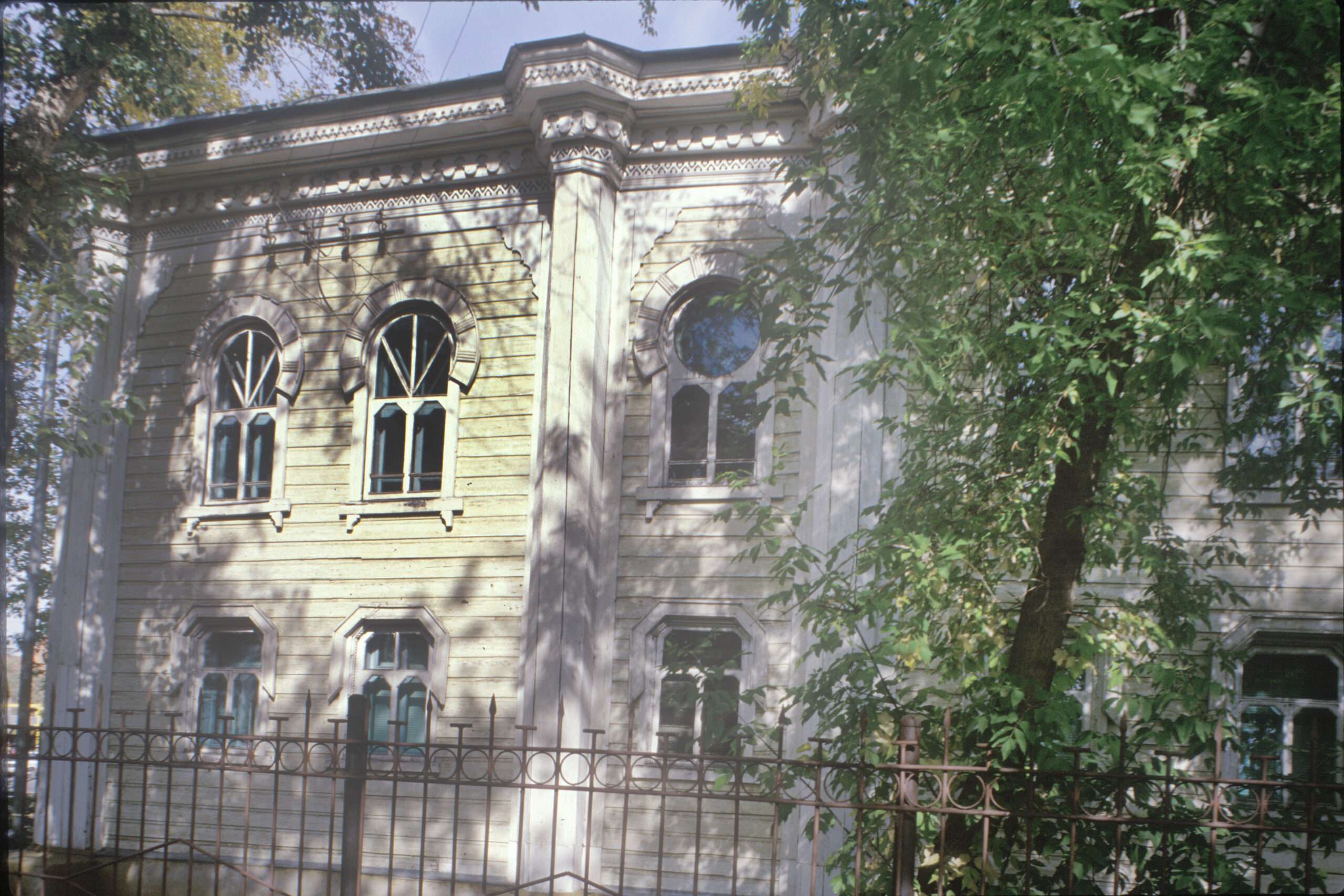
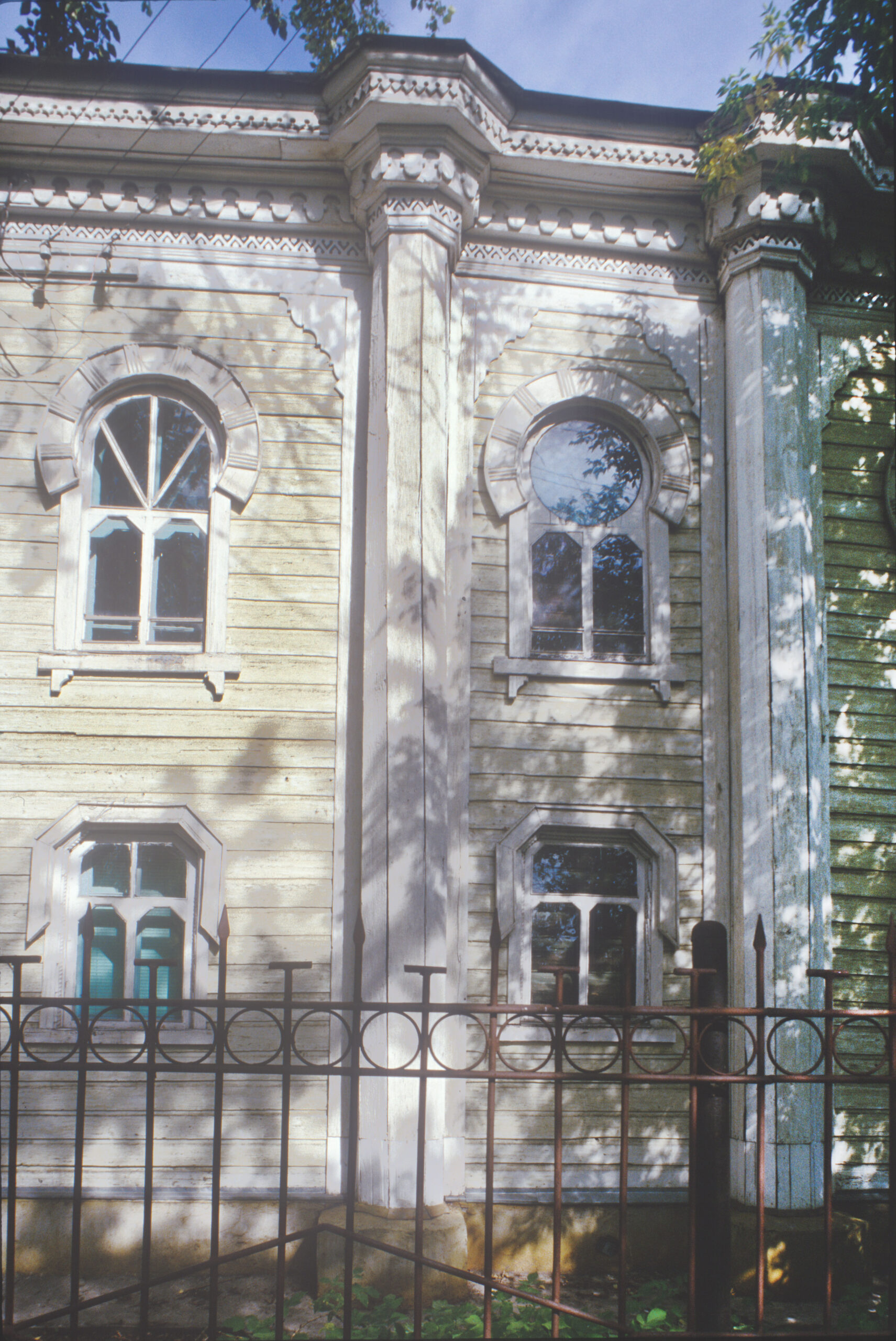
Omsk Synagogue
Photographed by William C. Brumfield